Kazakh Russian Medical University
If you've been researching MBBS options in Kazakhstan for a few weeks, you've probably already come across Kazakh Russian Medical University — usually shortened to KRMU. It's a private medical university in Almaty that's been training doctors since 1992, and it shows up constantly in Indian study-abroad forums, agent brochures, and comparison lists.
This guide pulls together what's actually verifiable about KRMU — its academic programs, fee ranges, admission process, and the regulatory rules that matter for Indian students — and is equally clear about what isn't verifiable from public sources, so you're not left guessing or relying on a consultant's word alone.
KRMU is not currently listed among the seven Kazakhstan universities that PSP Education works with directly, so treat this page as an independent research resource rather than a promotional profile. Where a claim can't be confirmed from an official or government source, we say so plainly.
Kazakh Russian Medical University at a Glance
| Particular | Detail |
|---|---|
| Full name | Kazakh-Russian Medical University (KRMU) |
| Local name | Казахстанско-Российский Медицинский Университет |
| Type | Private (non-commercial educational institution/NEI) |
| City | Almaty |
| Country | Kazakhstan |
| Established | 1992 |
| Address | Torekulova Street 71, corner of Seifullin Avenue, Almaty |
| Undergraduate programs | Medicine, Dentistry, Pharmacy, Nursing, Public Health, Medico-Prophylactic Care |
| Also offers | Master's, Doctoral (PhD), and Residency programs |
| Faculty strength | Approx. 1,150 teaching staff (per official site) |
| Student body | Approx. 6,868 students across 41 departments (per official site) |
| Language of instruction | English-medium track available for international students (confirm current syllabus language with the admissions office) |
| Official website | new.krmu.edu.kz |
| Admission route for Indians | Through the university's international admissions office or an authorised representative, subject to NEET and FMGL Regulations, 2021 compliance |
These figures come from KRMU's own website as retrieved in August 2026. University statistics change from year to year, so treat the faculty and student numbers as a general indicator of institutional size rather than a fixed figure.
About Kazakh Russian Medical University
KRMU was founded in 1992, in the years right after Kazakhstan's independence, as one of the country's earlier private medical institutions. It's based in Almaty — Kazakhstan's largest city and, until 1997, its capital — at a campus on Torekulova Street.
Different websites attribute the university's founding to different individuals, with some crediting Dr. Mukhtar Aliyev and others naming a different founding professor. Since this detail varies across secondary sources and isn't something we could independently confirm through KRMU's own "About Us" pages, we'd suggest treating founder biography claims from any consultancy website — including this one — with some caution unless the university confirms it directly.
What is consistent and verifiable is the timeline: over 30 years of operation, expansion from an institute into full university status, and a current academic footprint that, per KRMU's own site, includes over 14,000 graduates and 41 academic departments. The university describes itself as one of the larger private medical institutions in Kazakhstan, offering programs at undergraduate, master's, doctoral, and residency levels.
Like most Kazakhstani medical universities that enrol international students, KRMU operates under the oversight of Kazakhstan's Ministry of Science and Higher Education for its institutional licensing and accreditation. If you want to confirm KRMU's current licence and accreditation status, that's information the university itself should be able to produce on request — ask for it directly before you commit to anything financially.
Medicine Program at Kazakh Russian Medical University
The program Indian students are usually asking about is General Medicine (listed on KRMU's own site under the Kazakh program code 6B10113).
Based on the consistent pattern across multiple independent sources — though we recommend confirming the exact current structure directly with KRMU's admissions office before applying — the Medicine program typically runs as:
- Duration: Around 5 years of academic study followed by a 1-year internship, for a total of roughly 6 years
- Medium of instruction: English-medium track for international/foreign students, with Russian and Kazakh also taught as part of a broader curriculum
- Structure: Pre-clinical years (anatomy, physiology, biochemistry) followed by clinical years involving hospital-based rotations
- Degree awarded: A Kazakhstani medical qualification broadly equivalent to MBBS
KRMU also runs Dentistry, Pharmacy, Nursing, Public Health, and Medico-Prophylactic Care programs, along with postgraduate options — but Medicine is what nearly all Indian applicants are pursuing when they research this university.
One point worth being upfront about: exact syllabus content, current clinical-hospital affiliations, and year-by-year curriculum breakdowns aren't something we could verify from public sources in enough detail to publish with confidence. Ask the university directly for a syllabus document and a list of teaching hospitals before you finalise anything.
Kazakh Russian Medical University Fees
This is where a lot of confusion comes from, because different consultancy websites quote noticeably different numbers — annual tuition figures ranging anywhere from around USD 3,800 to USD 5,000, and hostel fees quoted anywhere Around $700–$800 a year. That spread is too wide to responsibly present as one confirmed figure.
Rather than pick whichever number looks most attractive, here's what we can say with reasonable confidence:
- Tuition: Multiple independent sources place KRMU's annual MBBS tuition somewhere in the Around $4,500 range, though this should be treated as an approximate band, not a confirmed current fee.
- Hostel/accommodation: Reported figures vary widely, generally somewhere between Around $700–$800 per year depending on room type and whether meals are included.
- Other costs to budget for: Medical insurance, visa processing, document legalisation/attestation, and a one-time admission or registration fee, which some universities charge separately from tuition.
- Currency and annual variation: Kazakhstani universities typically quote fees in either US dollars or Kazakhstani tenge. Tenge-denominated fees can shift in INR/USD terms with exchange rate movement, and universities do revise tuition periodically, usually announced ahead of each new intake.
Before you pay anything: get the current, written fee structure directly from KRMU's official admissions department or international office — ideally in the form of an official offer letter or fee schedule with the university's letterhead, not just a verbal quote from an agent. Ask specifically whether the quoted figure covers the full course or only the first year, whether hostel and mess are included, and whether there are annual increases built in.
Want help getting this verified before you commit? Our counsellors can help you cross-check fee quotes and admission offers against what universities are currently confirming — get in touch here.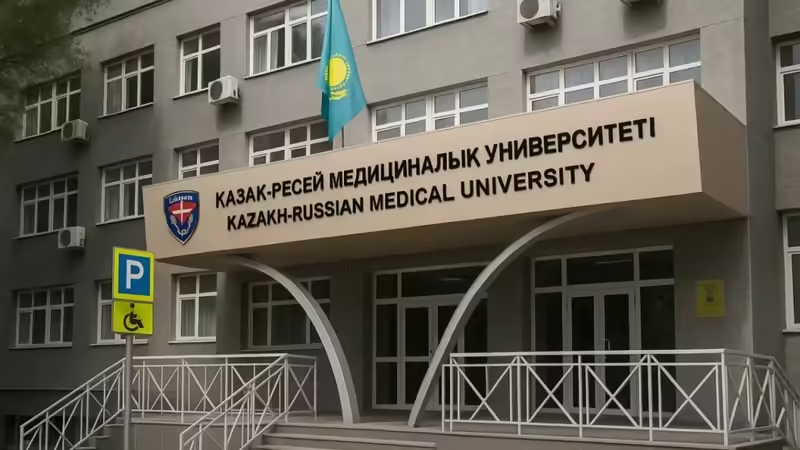
Fees Structure of Kazakh Russian Medical University Ranking
| Cost | Current publicly reported figure | Status |
|---|---|---|
| Tuition | Around $4,500/year reported by multiple sources | Verify with KRMU |
| Hostel | Around $700–$800/year reported by some sources | Verify with KRMU |
| Other expenses | Variable | Depends on student |
| Final payable amount | — | Obtain written fee schedule |
Kazakh Russian Medical University Ranking
Here's something worth knowing before you take any "world ranking" claim at face value: none of the major global ranking systems that Indian students typically recognise — QS World University Rankings, Times Higher Education (THE), or the Academic Ranking of World Universities (ARWU) — currently publish a ranking for Kazakh Russian Medical University.
Some directory-style aggregator sites (uniRank being one commonly cited example) list KRMU at a specific national and global position. These aggregators are useful for basic institutional listings, but they are not accreditation bodies and their "ranking" methodology is not comparable to QS or THE, which assess research output, faculty ratios, employer reputation, and similar weighted criteria. A high or low number on an aggregator site tells you very little about actual teaching quality.
What we'd suggest instead of chasing a ranking number: ask KRMU directly for its current institutional accreditation status with Kazakhstan's Ministry of Science and Higher Education, and check whether it appears in the World Directory of Medical Schools (WDOMS), which is maintained by FAIMER and the WFME and is a more relevant reference point for a medical school than a general university ranking.
Eligibility for Indian Students
Eligibility criteria for MBBS in Kazakhstan generally follow a similar pattern across universities, and KRMU is not reported to be an exception:
- Academic qualification: 10+2 with Physics, Chemistry, and Biology (PCB), typically with a minimum of 50% aggregate in PCB for general category candidates (lower cutoffs sometimes apply for reserved categories — confirm current NEET/eligibility norms with an official source).
- NEET: A qualifying NEET-UG score is required for Indian students, in line with Indian regulatory requirements for anyone intending to practise medicine in India after a foreign degree.
- Age: Generally a minimum of 17 years at the time of admission.
- Language requirement: English proficiency for the English-medium track; some universities also expect basic proficiency in Russian or Kazakh for clinical-year communication with patients, though this varies by institution.
- Passport validity: A passport valid well beyond the expected course duration.
Because eligibility rules for foreign medical study are set by Indian regulatory bodies and can be updated, always cross-check the current requirement against the NMC's official information for students planning to study abroad rather than relying solely on what a university or consultant tells you.
NEET Requirements
NEET-UG qualification is a mandatory requirement for any Indian citizen who wants their medical degree — earned in India or abroad — to be eligible for practice registration in India. This isn't specific to KRMU; it applies to virtually every foreign medical university Indian students consider.
A few things worth understanding clearly:
- There is no separate, official "qualifying score for MBBS abroad" published by NMC. NEET qualification itself (meeting the minimum percentile for your category) is generally what's checked, not a university-specific cutoff.
- Universities and consultants sometimes advertise "low NEET score accepted" language. That doesn't change the underlying Indian regulatory requirement — it usually just means the university's own admission threshold is lower than what Indian government colleges require.
- The NEET requirement exists independently of whatever KRMU's own internal admission criteria are. Meeting KRMU's admission bar does not substitute for meeting NEET and NMC requirements.
Admission Process
While we can't confirm KRMU's exact internal admission workflow beyond what's publicly described, the general pattern for Kazakhstani medical universities — and one you should verify directly with KRMU or a registered representative — typically looks like this:
- Shortlist and initial enquiry — Contact the university's international admissions office (or a verified representative) with your academic documents and NEET status.
- Document submission — Submit 10th and 12th mark sheets, NEET scorecard, passport copy, and photographs for eligibility review.
- Provisional/conditional offer or invitation letter — If eligible, the university issues an admission or invitation letter, which is required for the Kazakhstan student visa application.
- Fee payment — Pay the tuition (or first-year tuition, depending on the university's policy) as confirmed in writing, ideally against an official invoice.
- Visa application — Apply for a Kazakhstan student visa using the invitation letter and other supporting documents.
- Document legalisation — Get required documents attested/apostilled as per Kazakhstan's and India's requirements.
- Travel and enrolment — Travel to Almaty, complete in-person registration, medical checks, and begin academic orientation.
Ask specifically at each stage whether you're dealing with the university directly or through an intermediary, and get every commitment — fees, seat confirmation, hostel allocation — in writing before transferring money.
Documents Required
A fairly standard document checklist for Kazakhstan medical university admission includes:
- 10th and 12th standard mark sheets and certificates
- NEET-UG scorecard/admit card
- Valid passport (with sufficient validity remaining)
- Passport-size photographs
- Birth certificate
- Medical fitness certificate, including relevant health screening (HIV test is commonly required by Kazakhstani institutions)
- Police clearance certificate
- Invitation/admission letter from the university (for the visa application)
Document requirements can change and may vary slightly by intake, so confirm the current list directly with the university or your visa application centre before you start collecting paperwork.
Kazakh Russian Medical University for Indian Students
A few practical points that matter more once you're actually considering enrolment rather than just researching:
- Indian student community: Almaty hosts a sizeable international student population, and Indian students studying at various Kazakhstani universities have, in many cases, organised informal community and mess arrangements. Whether KRMU specifically has an established Indian mess or student association is something to confirm directly, rather than assume based on general Kazakhstan trends.
- Clinical training language: If your clinical years involve patient interaction in Russian or Kazakh, ask exactly how the university bridges that gap for English-medium students — this affects both your learning experience and your comfort during hospital rotations.
- Regulatory homework before enrolling: Confirm KRMU's compliance with the Foreign Medical Graduate Licentiate (FMGL) Regulations, 2021 (explained in more detail below) — this determines whether your degree will even be considered eligible for the Indian licensing process later.
- Currency and remittance: Understand how fee payments are structured — wire transfer to the university's own account with a receipt, versus payment through an intermediary — since this affects your ability to dispute or trace a payment later if something goes wrong.
Not sure whether you meet the current eligibility requirements, or want a second opinion on an offer you've received? Speak with our admission counsellors before you commit.
Location — Almaty, Kazakhstan
Kazakh Russian Medical University Almaty sits in Kazakhstan's largest and most cosmopolitan city, in the foothills of the Trans-Ili Alatau mountain range. Although Almaty stopped being Kazakhstan's official capital in 1997 (that role moved to Astana), it remains the country's commercial, cultural, and educational hub, and hosts the largest concentration of universities in Kazakhstan — including several of the country's better-known medical schools.
For an Indian student, a few Almaty-specific things are worth knowing:
- Climate: Almaty has a continental climate with cold winters (often well below freezing) and warm summers. Budget for proper winter clothing if you're arriving from most parts of India.
- International connectivity: Almaty International Airport has direct and connecting flights to major Indian cities, which matters for how often and how easily you can travel home.
- Cost of living: Kazakhstan is generally cited as more affordable than Western Europe or North America for day-to-day living, though "affordable" is relative — get a realistic monthly budget from current students if possible, rather than relying on marketing figures alone.
- Safety and stability: Kazakhstan is generally described in Indian government travel advisories and by returning students as a stable, relatively safe environment for international students, though as with study anywhere abroad, normal precautions and awareness of your surroundings apply.
If you're weighing KRMU specifically against the other Kazakhstan universities that Indian students commonly consider, our broader MBBS in Kazakhstan guide covers several NMC-relevant options side by side.
Hostel and Living Costs
As noted in the fees section, reported hostel fee figures for KRMU vary quite a bit across sources — anywhere from roughly USD 600 to USD 2,400 annually — which is too broad a range to present as a single confirmed number.
What we can say with more confidence, based on patterns across Kazakhstani universities generally:
- Hostel accommodation is commonly compulsory for at least the first year or two of study for international students.
- Rooms are typically shared (2–3 students), with meal arrangements sometimes included and sometimes billed separately.
- Monthly living costs (food, transport, personal expenses, phone/internet) beyond hostel fees are commonly estimated in the range of a few hundred US dollars per month across Kazakhstani cities, though Almaty tends to run somewhat higher than smaller Kazakh cities given it's the country's largest urban centre.
Get KRMU's current hostel fee schedule, room-sharing policy, and what's included (meals, laundry, internet) in writing before you factor it into your total cost planning.
Advantages and Considerations
Potential advantages:
- Over three decades of operating history as a private medical institution
- English-medium instruction track for international students
- Located in Almaty, a well-connected, internationally accessible city with a substantial expatriate and international student population
- Offers programs beyond Medicine (Dentistry, Pharmacy, Nursing) if you're considering allied health options
Things to weigh carefully:
- Fee figures across public sources are inconsistent, which makes it harder to budget confidently without a direct, written quote from the university
- No confirmation from a major global ranking body (QS/THE/ARWU) — reputation-based marketing claims should be verified independently
- Clinical-year language of instruction and hospital affiliation details need direct confirmation
- As with any foreign medical degree, eligibility for Indian licensure depends entirely on the specific course structure matching NMC's FMGL Regulations, 2021 — this needs to be verified for KRMU specifically, not assumed
None of this means KRMU is a poor choice — it may well be a reasonable option for the right student. It means the due-diligence step shouldn't be skipped just because a brochure or an agent sounds confident.
Is Kazakh Russian Medical University a Good Choice for Indian Students?
There isn't a single right answer here — it depends on what you're optimising for.
If English-medium instruction, an established multi-decade track record, and a large-city location matter most to you, KRMU has those boxes checked, at least on paper. If your priority is a fully transparent, publicly verifiable fee structure with minimal cross-source discrepancy, you'll want to push harder on getting written confirmation before assuming the commonly quoted figures are accurate for your intake year.
If your primary concern is NMC eligibility and a smooth path to NExT/FMGE, that isn't determined by the university's reputation or how long it's been operating — it's determined by whether the specific program you enrol in matches the FMGL Regulations, 2021 structure (minimum 54 months, single-institution study, English medium, matching subjects, and a 12-month internship at the same institution). This is true for KRMU exactly as it is for every other foreign medical university, and it's worth confirming in writing rather than taking on faith.
Our honest recommendation: treat KRMU as one option to evaluate against other Kazakhstan universities — including the NMC-relevant options covered in our Kazakhstan guide — rather than a default choice, and base your final decision on documents you've personally verified rather than marketing claims alone.
How to Apply
If, after doing this research, you decide to move forward with KRMU or want to compare it properly against other Kazakhstan universities, the practical next steps are:
- Request KRMU's current, written fee structure and syllabus directly from their international admissions office.
- Confirm current NEET eligibility norms and FMGL Regulations, 2021 compliance for the specific program you're applying to.
- Cross-check any consultant or agent's claims against what the university itself confirms in writing.
- Compare the offer against at least one or two alternative universities before committing funds.
If you'd rather not chase all of this down university by university, PSP Education's counsellors can help you shortlist and cross-verify options based on your NEET status, budget, and preferences — including comparing Kazakhstan against other MBBS-abroad destinations. Get free counselling and a personalised shortlist here, or explore other MBBS-abroad destinations we cover if you're still weighing your country choice.
Frequently Asked Questions
Is Kazakh Russian Medical University a good option for MBBS?
It can be, depending on your priorities. KRMU has over three decades of operating history and offers English-medium instruction, but publicly available fee figures vary considerably across sources, and specific NMC-eligibility details for its current program structure should be confirmed directly with the university before applying.
Where is Kazakh Russian Medical University located?
It's located in Almaty, Kazakhstan's largest city, at Torekulova Street 71, near the corner of Seifullin Avenue.
When was Kazakh Russian Medical University established?
In 1992, making it one of the older private medical institutions in post-independence Kazakhstan.
What is the Kazakh Russian Medical University fee structure?
Publicly reported figures place annual MBBS tuition somewhere in the range of roughly USD 3,500–5,000, though this varies across sources and should be confirmed directly with the university's admissions office before you rely on it for financial planning.
What is Kazakh Russian Medical University's world ranking?
No major global ranking body (QS, THE, or ARWU) currently publishes a ranking for KRMU. Some directory-style aggregator websites list a national or global position, but these aren't comparable in methodology to recognised university rankings.
Is NEET required for admission to Kazakh Russian Medical University?
Yes. NEET-UG qualification is required for any Indian student whose eventual goal is to be eligible for medical licensing and practice in India, regardless of which foreign university they attend.
Is Kazakh Russian Medical University NMC-approved?
The NMC does not publish or endorse an official "approved list" of foreign medical institutions. What matters instead is whether your specific course at KRMU complies with the Foreign Medical Graduate Licentiate (FMGL) Regulations, 2021 — covering course duration, medium of instruction, and internship structure. Confirm this compliance directly with KRMU and, where possible, with NMC's own published guidance before applying.
What is the duration of the Medicine program at KRMU?
The current university information describes Medicine as a 6-year program. Students should confirm the exact academic and internship structure applicable to their intake directly with KRMU.
Is hostel accommodation compulsory at KRMU?
Hostel accommodation is commonly required, at least for the initial years of study, for international students at Kazakhstani universities generally. Confirm KRMU's specific policy, room-sharing arrangement, and costs in writing.
How much does it cost to live in Almaty as a student?
Reported estimates vary, generally in the range of a few hundred US dollars per month for accommodation, food, and daily expenses, though this depends heavily on lifestyle and should be budgeted with a buffer.
Can I appear for FMGE/NExT after graduating from KRMU?
Eligibility for FMGE (soon to be phased out) or NExT depends on your specific course meeting the FMGL Regulations, 2021 requirements — not on the university's general reputation. Confirm this compliance before you enrol, not after you graduate.
How do I verify KRMU's current fees and admission details before applying?
Request a written offer letter or fee schedule directly from KRMU's international admissions office, and consider getting an independent second opinion from an education counsellor before making any payment.