Introduction to MBBS in Uzbekistan for Indian Students
Thinking about becoming a doctor but private MBBS in India looks impossible without a huge budget or a top NEET rank? That’s exactly why thousands of Indian students are now considering MBBS in Uzbekistan as a serious option.
Uzbekistan has become one of the most talked-about MBBS abroad destinations for Indian students because of:
- Comparatively low tuition fees and living costs
- English-medium teaching in many universities
- NMC/WHO-recognised medical universities
- A 5+1 year structure that broadly aligns with NMC guidelines
At the same time, there are genuine concerns—like varied quality between universities, language issues with patients, and inconsistent campus facilities in some places.
This guide gives you a balanced, honest and SEO-optimised explanation of MBBS in Uzbekistan for Indian students, with all the practical details you need—fees, eligibility, admission steps, career scope and how a professional consultancy like PSP Education can help you avoid costly mistakes.
Why Indian Students Choose MBBS in Uzbekistan
Key Advantages for Indian Students
Some advantages of choosing MBBS Uzbekistan for Indian students:
- Affordable total package
Overall cost of MBBS in Uzbekistan usually stays in the range of a middle-class budget for many families, especially compared to Indian private colleges. - NMC & WHO recognition
Many universities in Uzbekistan are listed in international directories and are recognised by regulatory bodies, which is crucial if you want to practice in India after clearing FMGE/NExT. - English-medium teaching
Most programs meant for international students are in English, which makes classroom learning smoother. - No donation / capitation fees
Unlike many private colleges in India, generally there is no donation. You pay only the official university fee. - Simple admission process
If you meet eligibility, have NEET qualification and the right documents, admission can be processed quickly with guidance from a genuine consultancy such as PSP Education.
Challenges and Practical Realities
To stay realistic, you should also know the challenges:
- Quality differences between universities – Top government universities are much better than some new or low-ranked institutes.
- Language barrier in hospitals – Classes are in English, but patients often speak Uzbek or Russian, so you must learn basic local phrases for clinical work.
- Mixed student feedback – Some students have reported issues like poor hostels, weak teaching in some departments or lack of support.
- FMGE/NExT is still mandatory – Studying abroad doesn’t remove the exam pressure. You must clear FMGE/NExT to practice in India.
A good consultancy like PSP Education helps you avoid risky options, understand real student feedback and select universities that match NMC norms and acceptable standards.
Uzbekistan vs India: Cost, Seats and Competition
- Government MBBS in India – Limited seats and extremely high competition.
- Private MBBS in India – Often requires a very high total budget.
- MBBS in Uzbekistan – Usually much more affordable, with a structured course and clear admission requirements.
For many middle-class families, that cost difference is the main reason MBBS Uzbekistan feels like a realistic path to becoming a doctor.
Top Medical Universities for MBBS in Uzbekistan
NMC & WHO-Recognised Universities
You should always look for universities that:
- Are listed in recognised global medical directories
- Follow NMC guidelines regarding duration and internship
- Offer at least 5 years of academic training + 1 year of internship
Some commonly known universities among Indian students include:
- Tashkent State Medical University / Tashkent Medical Academy
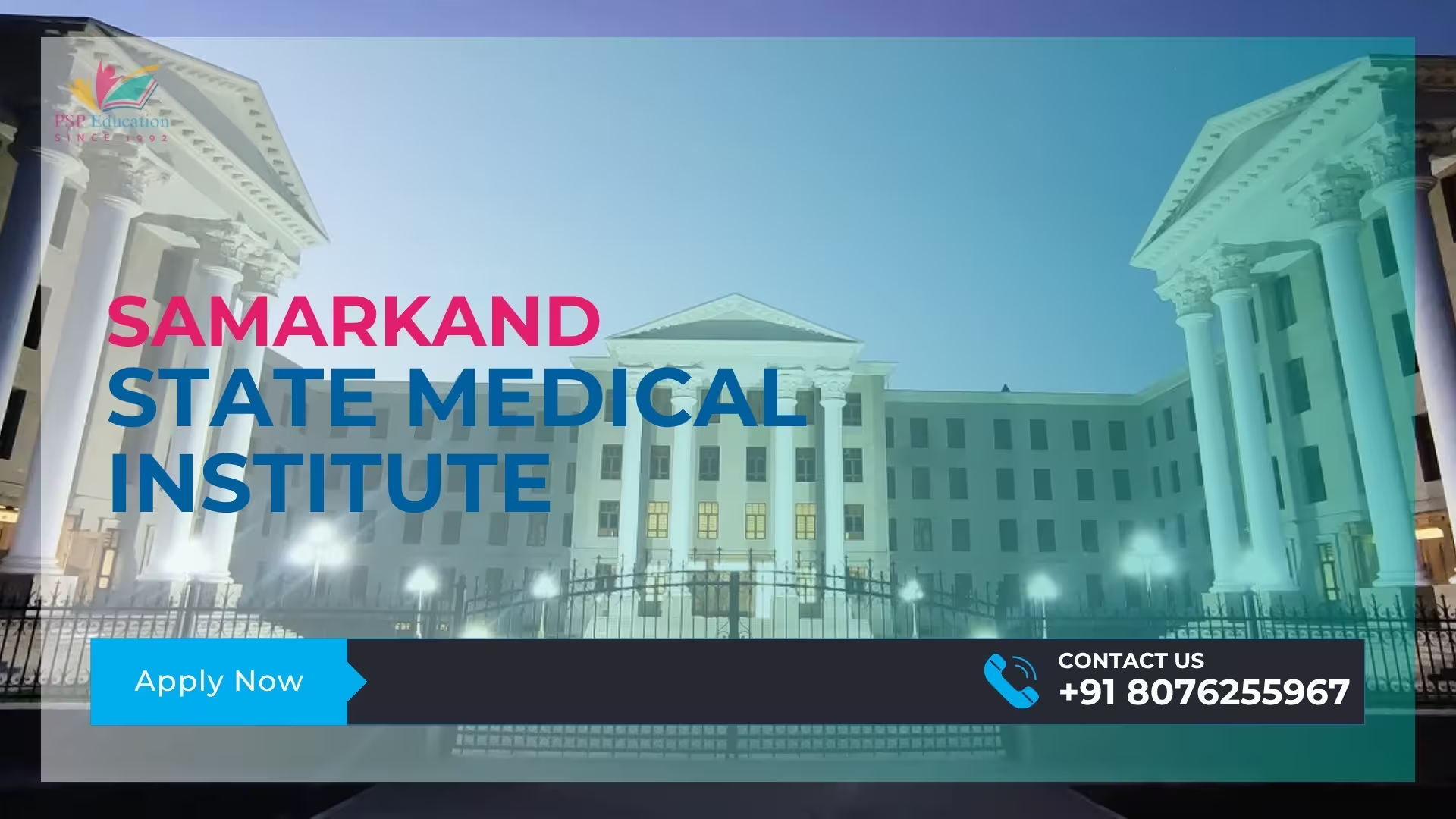
- Samarkand State Medical University
- Andijan State Medical Institute
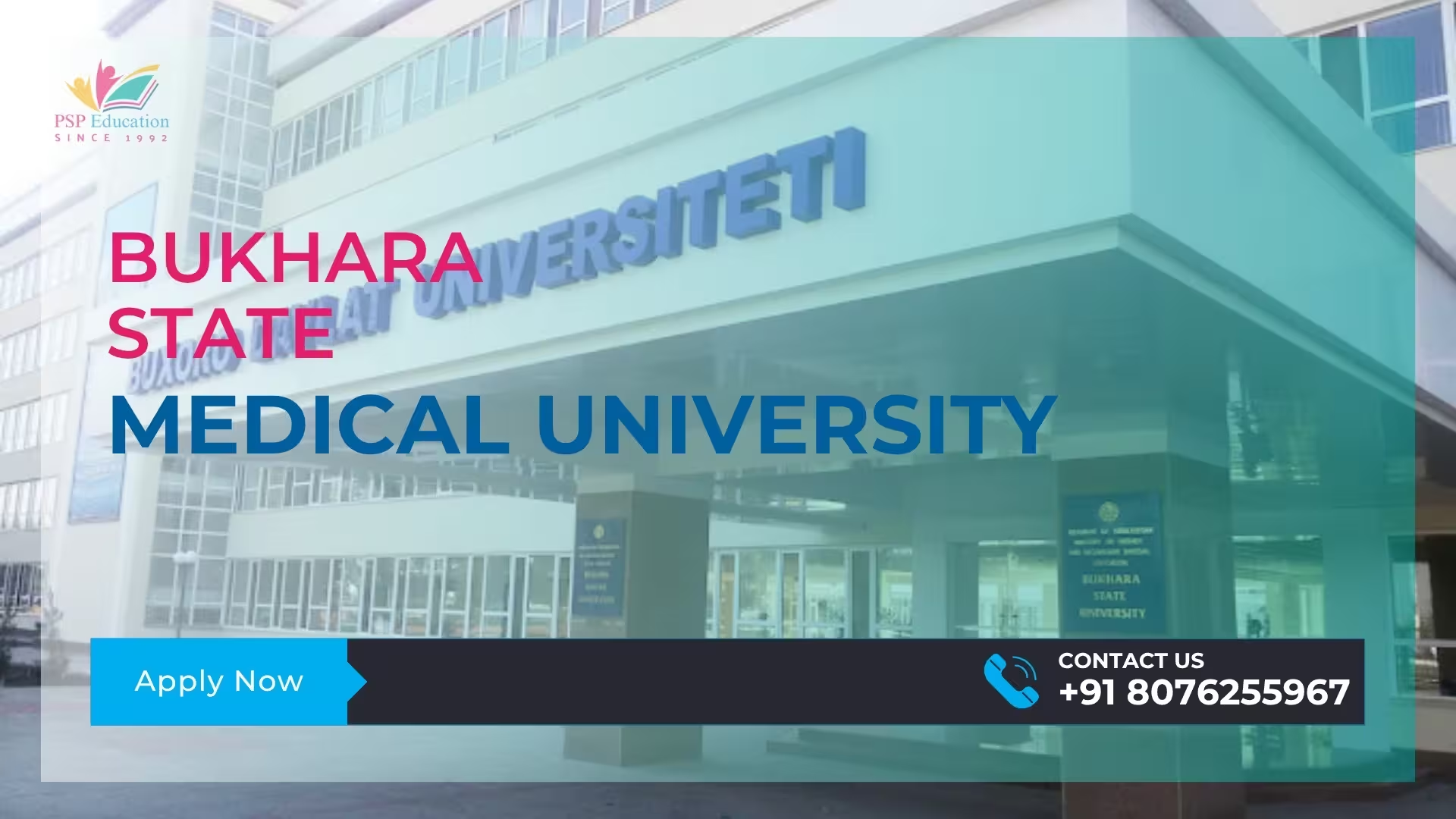
- Bukhara State Medical Institute
- Fergana Medical Institute of Public Health
- Tashkent Pediatric Medical Institute
Always verify current recognition status from official sources before finalising. PSP Education helps you cross-check all this during counselling.
Shortlisted Popular Universities for Indians
When shortlisting, these factors matter a lot:
- Government vs private status
- Year of establishment and reputation
- Practical training and hospital tie-ups
- Number of Indian students and Indian mess availability
- Safety, city environment and living costs
PSP Education analyses these points and suggests shortlisted universities that match your budget and academic background, instead of pushing a single option.
Top Countries to Compare with Uzbekistan for MBBS Abroad
Many students don’t just ask, “Is MBBS in Uzbekistan good?”
They ask, “Is it better than MBBS in Russia, Kazakhstan, Kyrgyzstan & Georgia?”
Uzbekistan vs Russia
- Fees: Both can be affordable, but some Russian universities may have higher packages.
- Climate: Russia usually has harsher winters; Uzbekistan is cold, but comparatively milder.
- Language: You need basic local language skills in both places for dealing with patients.
- Reputation: Russia is an older, more established destination; Uzbekistan is growing fast and becoming more popular.
Uzbekistan vs Kazakhstan & Kyrgyzstan
- Kazakhstan – Good clinical exposure and many recognised universities, but overall cost can be slightly higher.
- Kyrgyzstan – Very popular due to low fees and strong Indian student presence, but quality varies widely between colleges.
- Uzbekistan – Stands in the middle with balanced fees, recognition and improving infrastructure, especially in well-known government universities.
Uzbekistan vs Georgia & Other Options
- Georgia – Branded as a European-style destination with higher overall costs.
- Uzbekistan – More budget-friendly but without the “European” branding.
- Other destinations like Bangladesh, Egypt, etc., also compete in this segment, each with its own pros and cons.
In counselling, PSP Education compares 3–4 countries for you so that you understand where Uzbekistan fits in terms of budget, quality and branding.
Eligibility Criteria for MBBS in Uzbekistan 2026-27
Academic Eligibility for Indian Students
Typical eligibility patterns:
- Completed 10+2 with Physics, Chemistry, Biology and English.
- Minimum 50% aggregate in PCB for general category (some relaxation may be applicable for reserved categories as per Indian norms).
- Passed from a recognised board (CBSE, ICSE or state board).
NEET, Age Limit and Attempt Criteria
- NEET Qualification: Mandatory for Indian students who want to return to India and appear for FMGE/NExT later.
- Age: Minimum 17 years by 31st December of the admission year.
- Attempts: Attempts in NEET are governed by NTA. Universities primarily check whether you are qualified, not how many attempts you took.
Documents Required for MBBS Admission
You will typically need:
- 10th and 12th mark sheets and certificates
- NEET scorecard and admit card
- Valid passport
- Passport-size photographs
- Birth certificate
- Medical fitness certificate
- Vaccination records as required
- Bank statement or financial proof for visa
- Affidavits and consent letters as per guidelines
PSP Education provides you with a complete checklist and formats to avoid rejection due to documentation issues.
MBBS in Uzbekistan: Course Structure & Duration
Course Duration and Internship
Most MBBS programs in Uzbekistan follow a 6-year pattern:
- 5 years of academic and clinical training
- 1 year of mandatory internship
This aligns well with current foreign medical graduate norms that expect sufficient academic duration plus internship.
Medium of Instruction & Teaching Pattern
- Classroom teaching for international students is typically in English.
- During clinical rotations, local language (Uzbek/Russian) is used with patients, so students gradually learn basic communication.
Teaching usually includes:
- Theoretical lectures and seminars
- Practical lab sessions
- Dissection and anatomy practice
- Clinical postings in affiliated hospitals
- Internal assessments and professional exams
Syllabus Overview and Clinical Exposure
The syllabus is broadly similar to Indian MBBS and covers:
- Pre-clinical: Anatomy, Physiology, Biochemistry
- Para-clinical: Pathology, Microbiology, Pharmacology, Community Medicine
- Clinical: Medicine, Surgery, Gynaecology & Obstetrics, Paediatrics, Orthopaedics and others
Some universities offer strong hospital tie-ups with high patient inflow, while others may be weaker in clinical exposure. Choosing the right university with proper guidance from PSP Education is crucial.
Cost & Fees of Studying MBBS in Uzbekistan
Tuition Fees Range (Per Year & Total Package)
A typical range for MBBS in Uzbekistan fees for Indian students:
- Tuition fee per year: usually in the range of low to medium cost by international standards
- Total tuition for full course: significantly lower than most Indian private colleges
- Overall package (including hostel and other expenses) is generally manageable for a middle-class family compared to Indian private MBBS
Exact figures differ from university to university, but Uzbekistan is widely seen as a high value-for-money destination.
Hostel, Mess and Living Expenses
Typical monthly expenses:
- Hostel charges – generally economical, especially in university hostels
- Mess / food – Indian mess options are often available; otherwise, cooking is possible in shared kitchens
- Other expenses – SIM, local transport, study materials, personal expenses
Overall, the cost of living is moderate and often lower than living in a big Indian metro.
Overall Budget Planning for a Middle-Class Indian Family
When you add:
- Tuition fees for all years
- Hostel and mess charges
- Visa, insurance, flight tickets
- One-time charges like registration and documentation
…the overall budget for MBBS in Uzbekistan commonly falls into a range that a middle-class family can manage with planning, educational loans or savings.
PSP Education usually prepares a detailed university-wise budget sheet so parents know exactly what to expect over the coming years.
Uzbekistan Fees vs Other MBBS Abroad Destinations
In many cases:
- Uzbekistan is cheaper than some European destinations
- Comparable or sometimes lower than a few Russian or Central Asian universities
- Much more affordable than private MBBS in India
That’s why MBBS Uzbekistan is increasingly seen as a value destination for serious students.
NMC / WHO-Approved Medical Universities in Uzbekistan
Why NMC Approval Matters for Indian Students
If your university is not recognised:
- You may not be allowed to appear for FMGE/NExT.
- Your degree may not be accepted for practice in India.
- You may face problems for postgraduate studies or jobs.
So, it is essential that your university:
- Is listed in recognised medical directories
- Meets NMC norms related to duration, medium, internship and clinical exposure
Sample List of Recognised Universities (Indicative)
Some universities commonly promoted by consultancies and known among Indian students include:
- Tashkent State Medical University / Tashkent Medical Academy
- Samarkand State Medical University
- Andijan State Medical Institute
- Bukhara State Medical Institute
- Fergana Medical Institute of Public Health
- Tashkent Pediatric Medical Institute
- Tashkent State Dental Institute
This is an indicative list. PSP Education will help you verify the current status for each university before you finalise.
How to Verify Recognition Before Taking Admission
You and your parents should:
- Check if the university appears in recognised medical directories.
- Cross-check NMC’s current rules and notifications.
- Ask your consultant (PSP Education) for documentation or confirmations.
- Speak directly with existing Indian students studying there.
A bit of careful verification now can save years of regret later.
Admission Process for MBBS in Uzbekistan – Step-by-Step
Timeline: From Application to Visa
For a typical September intake, the timeline is roughly:
- January–April: Research countries and shortlist universities with PSP Education
- May–June: NEET exam and results
- June–August: University applications, offer letters and initial fee payments
- August–September: Visa processing, pre-departure briefing, travel to Uzbekistan
- September–October: Classes start (depending on the university schedule)
Stepwise Admission Roadmap
- Counselling with PSP Education
Discuss your profile, NEET status, budget and preferences. - University Shortlisting
Based on your marks, budget, city preference and language comfort. - Application & Offer Letter
Submission of academic documents and receiving the provisional admission letter. - Fee Payment & Documentation
Payment of initial tuition/seat confirmation fees and preparation of translated or notarised documents if required. - Visa Processing
Invitation letter from the university, visa file preparation and embassy processing with guidance from PSP Education. - Travel & Airport Pickup
Flight bookings, group departures (where available) and airport pickup arrangements at the destination city. - Hostel Allotment & Registration
Hostel allocation, local registrations and orientation. - Start of Classes & Orientation
Introduction to faculty, campus facilities and academic schedules.
Role of PSP Education in Your Admission Journey
PSP Education acts as a complete MBBS abroad partner:
- Transparent university recommendations
- Documentation and visa support
- Guidance on education loans, forex and insurance
- Travel assistance, airport pickup and hostel settlement
- On-ground support via local partners and regular follow-ups
This ensures your admission process is smooth, safe and stress-free.
Living in Uzbekistan as an Indian MBBS Student
Accommodation, Food and Culture
- Most universities offer on-campus hostels for international students.
- Rooms may be 2–4 sharing, with basic amenities like bed, study table, cupboard, etc.
- Many campuses or nearby areas have Indian mess / restaurants, which is a big relief for Indian students.
- Local culture is generally friendly and welcoming, and people are curious about Indian movies, music and food.
Safety, Climate and Lifestyle
- University cities are usually considered student-friendly and relatively safe.
- Winters can be cold with temperatures dropping below zero, so good winter wear is a must.
- Lifestyle is more relaxed than in major Indian metros, with parks, cafes and malls, but not as flashy as Western Europe.
Tips to Avoid Scams and Wrong Colleges
To stay safe and avoid problems:
- Avoid unknown agents who offer “too good to be true” discounts.
- Always demand receipts and written communication.
- Cross-check fees and details with what’s provided officially.
- Ask to connect with current Indian students already studying there.
- Prefer established and reputed consultancies like PSP Education.
Benefits & Career Opportunities after MBBS in Uzbekistan
Practice in India – FMGE / NExT Pathway
After completing MBBS from a recognised university in Uzbekistan:
- Complete your 5+1 year program with internship.
- Return to India with degree, transcripts and internship documents.
- Appear for FMGE (and later NExT as per new rules).
- On qualifying, register with the relevant State Medical Council or NMC.
- Start working as a doctor in government or private hospitals or open your own clinic.
Opportunities Abroad – USMLE, PLAB, Gulf Countries
With a valid MBBS degree, you can also:
- Prepare and appear for USMLE, PLAB or other licensing exams depending on the target country.
- Explore job opportunities in Gulf countries or other regions that accept international graduates, subject to local rules.
- Pursue postgraduate programs abroad in different specialities.
Many students view MBBS in Uzbekistan as a strong foundation for an international medical career.
Long-Term Career Growth after MBBS Abroad
Your long-term success will depend on:
- How seriously you study during MBBS
- The quality of clinical exposure you get
- Your performance in qualifying exams (FMGE/NExT, USMLE, PLAB etc.)
- The guidance and mentorship you follow during and after MBBS
Right university choice, consistent effort and professional support from PSP Education can put you on a solid career path.
Why Choose PSP Education for MBBS in Uzbekistan
Expert Counselling & University Shortlisting
PSP Education focuses on MBBS abroad admissions and has experience in countries like Uzbekistan, Russia, Kazakhstan, Kyrgyzstan, Georgia and others.
With PSP Education, you get:
- Personalised one-to-one counselling
- Honest comparison between multiple countries and universities
- Shortlisting based on your NEET score, budget and career goals
Honest Guidance on Pros & Cons
PSP Education believes in real guidance, not just marketing:
- Explains both advantages and disadvantages of MBBS in Uzbekistan
- Shares genuine feedback from current Indian students
- Alerts you about universities with frequent complaints or poor reviews
This transparency builds trust and helps parents feel secure about their decision.
End-to-End Support from India to Uzbekistan
From your first counselling call until you settle in the university, PSP Education supports you with:
- Admission and documentation
- Visa filing and interview support (if needed)
- Travel planning and airport pickup
- Hostel allocation and initial settlement
- Ongoing support during your course for academic or personal issues
If you want a safe, structured and reliable path to MBBS in Uzbekistan, partnering with PSP Education is a smart move.
Conclusion – Is MBBS in Uzbekistan the Right Choice for You?
So, should you choose MBBS in Uzbekistan?
It can be a great decision if:
- You dream of becoming a doctor but can’t afford Indian private MBBS.
- You are ready for a new country, culture and climate.
- You carefully choose an NMC-compliant, reputable university.
- You are prepared to work hard for FMGE/NExT and other exams.
It may not be right for you if:
- You expect everything to be exactly like India.
- You are not ready to adapt to local language and culture.
- You want an “easy” degree without real effort.
If you and your parents are seriously considering this path, your next step should be to take professional guidance.
Ready to explore MBBS in Uzbekistan?
Get detailed counselling, university shortlisting, transparent fee breakdown and full admission support – Apply now with PSP Education and start your MBBS journey with confidence.